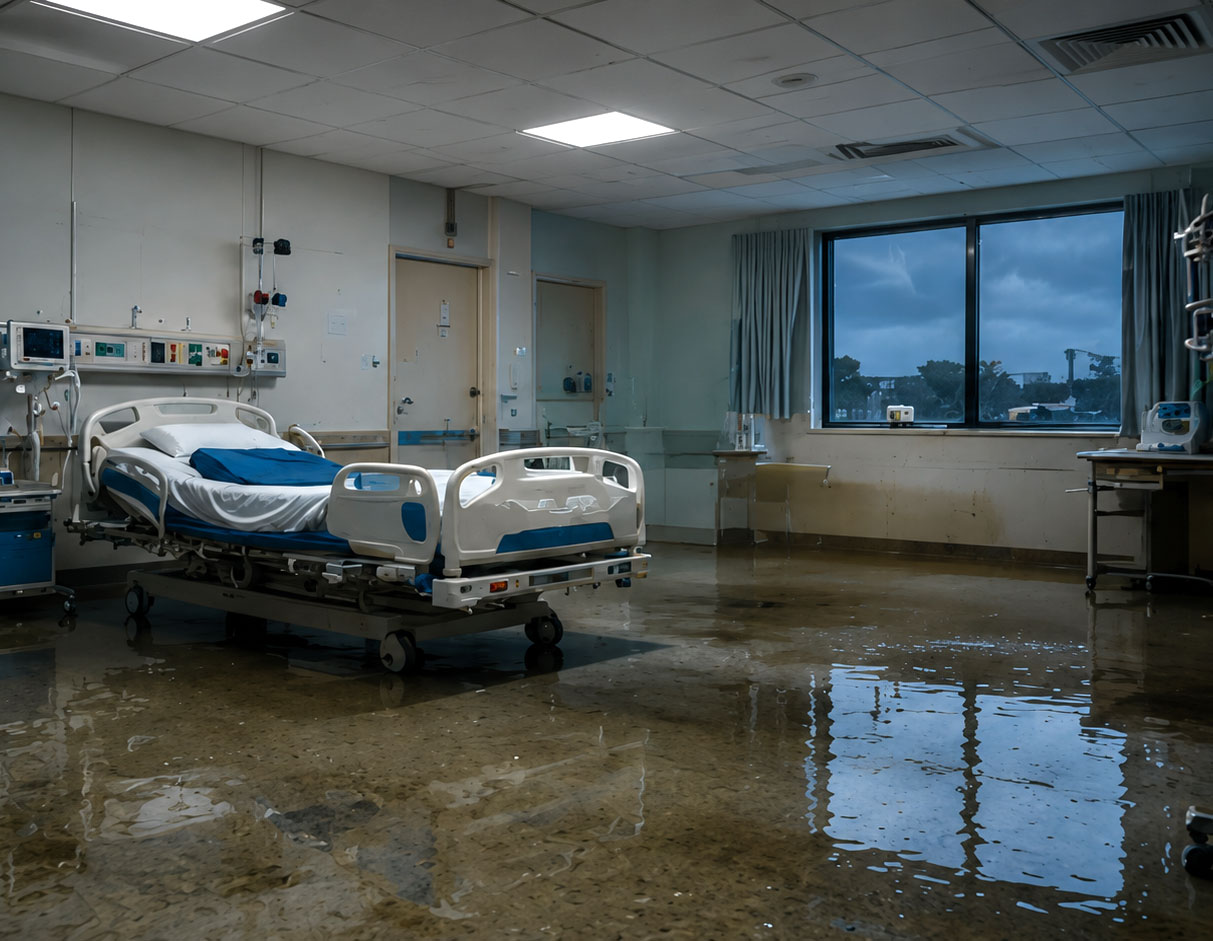
When the Storm Passes, the Real Risk Begins

Emergency response support for hospitals, health systems, and senior living facilities navigating water intrusion, contamination, and operational disruption after hurricanes and severe weather.

Request Emergency Support


Storm Damage Isn’t Just Structural,
It’s Environmental


Hurricanes and severe weather events introduce more than visible damage. In healthcare environments, this is more than a facilities issue - it becomes a patient safety, compliance, and operational continuity challenge. Once water enters a facility, it triggers a chain reaction inside the building:
 

Moisture spreads through walls, ceilings, and flooring systems
Hidden water creates conditions for microbial growth
Contaminants can move through HVAC systems
Indoor air quality begins to degrade
 

ER in Healthcare Is
Not One-Size-Fits-All

 
  • Patient safety and infection control are non-negotiable
  • Hidden moisture can impact walls, ceilings, and air handling systems
  • Electrical, fire protection, and medical waste systems may be affected
  • Some spaces must remain operational while remediation occurs

GHP helps facilities teams prioritize and phase remediation, focusing first on critical care areas while safely deferring non-critical spaces when appropriate.


Steps to Reduce Water Damage


Confirm locations of water shutoff valves

Inspect sprinkler lines near entrances and vestibules

Monitor rooftop HVAC units and exposed piping

Establish an emergency response plan and point-of-contact


The First 24–72 Hours Define the Outcome


After a storm, the most critical damage is often the least visible. Water does not remain where it enters. It migrates through building systems - behind walls, above ceilings, and through mechanical pathways - creating hidden moisture conditions that worsen over time.

Within the first 24 to 48 hours, building materials begin to absorb and retain moisture. By approximately 72 hours, conditions are often sufficient for microbial growth to initiate. At the same time, airborne contaminants can begin circulating through HVAC systems, expanding the impact beyond the original intrusion area.

The difference between a controlled recovery and a prolonged disruption is not just response time - it is whether the response is structured, informed, and aligned with how buildings perform under stress. Early, data-driven decisions reduce risk, limit scope, and protect both operations and occupants.

GHP supports facilities teams during this critical window by bringing clarity and structure to the response process - ensuring decisions are based on measurable conditions, not assumptions.


Rapid Response & Early Assessment

On-site within 24 hours to stabilize conditions and begin data collection

Moisture Mapping & Hidden Damage Detection

Identify the full extent of water intrusion, including concealed moisture

Independent Scope Development

Define what truly requires remediation to avoid over- or under-response

Environmental & Contamination Evaluation

Assess microbial risk, water classification, and regulatory considerations

Operationally Aligned Recovery Planning

Phase remediation to protect patient care and maintain operations

Air Quality Verification & Clearance

Confirm safe, compliant conditions before re-occupancy


Emergency Response Is Not Just Cleanup,
It’s Risk Management


Traditional response models focus on removing water and rebuilding materials.

But storm-related damage is a system-level environmental issue, involving moisture dynamics, contamination, and indoor air quality. GHP acts as a third-party industrial hygienist and building science partner, ensuring:

  • The response is appropriate - not excessive or insufficient
  • Decisions are supported by defensible data
  • Facilities are protected from unnecessary cost and risk
  • Recovery aligns with healthcare standards and compliance requirements

This independent role helps protect both the facility and the integrity of the response process.


Stay Operational While You Recover


For hospitals and health systems, shutting down operations is rarely an option. Emergency response must be executed while maintaining patient care and critical services.

GHP works alongside facilities and operations teams to sequence remediation activities based on priority and risk. Impacted areas are isolated and addressed in phases, allowing critical functions to continue while recovery progresses.

This coordinated approach minimizes disruption, reduces downtime, and supports safe, continuous operation throughout the response process.


Proven Experience in
Large-Scale Storm Response

If you are evaluating your facility after a storm or preparing for potential impact, GHP is available to provide independent, science-based guidance.